In this post I'm going to develop a rough-shod mechanic for Mercs (working title).
At the heart of the RPG, and really any game, is the Engine. It's the equivalent of the programming language or chord progression for the game, in that it not only determines what is allowed, but how the players can accomplish it. It's the thematic backbone for how the game feels when you play it, and the mechanic easily makes or breaks the game.
Generally an RPG system consists of some sort of quantified character ability, represented by attributes, stats, skills, or something similar. The classic stat array is the D&D Six: Strength, Dexterity, Constitution, Intelligence, Wisdom, and Charisma, where every 2 points above a 10 gives you +1 on your d20 roll. I'm not making a D&D clone, so I'm not going to use those.
In recent years with the boom in self-published/indie RPGs there's been a huge variety of systems created, which run from a classic Skill+Stat combination, to drawing cards from a deck, to betting dice like you're playing poker.
Here's some examples of some systems and how they help deliver their respective tone:
Savage Worlds: In Savage Worlds each Skill is rated as a die, from a d4 to the d12. A player succeeds when they roll a 4 or higher, with additional successes (called Raises) on every 4 above that (8, 12, etc). In addition, the player rolls a Wild Die, which is always a d6 and allows each player the same chance of succeeding on a skill, no matter their actual skill rating. Because Savage Worlds is all about playing big, flashy, pulp-adventure-style heroes, this lets even the less-capable characters get their shining moment and delivers fairly consistent action-moments.
Apocalypse World: Apocalypse World has an unusual system where every action is accomplished by performing a Move, each of which is tied to a certain stat. The player rolls 2d6 and adds the relevant Stat to their roll, and depending on the result there's a different effect (failure is 6 or under, partial success is 7-9, and 10+ is a full success). This accomplishes several things: it means the GM never has to roll dice, as the players make all the decisions, which helps emphasize the book's assertion that the PCs are unique in their agency. It also lets the story advance during failures, which is a problem with several other systems where a failure means that player/story momentum falters for a moment.
Eclipse Phase: Eclipse Phase uses a fairly standard d% system, where you roll a d100 or, more commonly, 2d10 and read the result as a percentage, and rolling underneath your Stat is a success. Whenever I describe it to someone I call it a Price-is-Right system, because the higher you roll, the better you do...as long as you don't go over your Stat. In a setting where PC competence is assumed, but lethality is still a major theme, it makes you feel like you're always pulling by by the skin of your teeth, even when you get a particularly good roll.
Dogs in the Vineyard: In a game where you play Mormon-Jedi in an Alternate-History Wild West, you have pools of Stats (Heart, Acuity, Will, and Body), Relationship dice, and Item dice. You build a dice pool depending on the conflict, roll them, and put them forward in an effort to out-perform your opponent. It rewards tactical dice use and turns conflict into a back-and-forth game where the chance for escalation can produce real consequences. Bringing a gun into the conflict, for example, can increase your chances of winning an argument, but the potential for grave injury also increases, whether you want it to or not.
I'm going to choose to use a d% system, for a number of reasons:
1. It's simple. You only really need 2 dice, it's easy to read the results, and changes to the actual numbers don't make calculating your odds of success/failure any more difficult than it was before. Did you have a 40% chance to succeed, but got a +13 bonus? Now you have a 53% chance to succeed. Easy.
2. Going off of the above, it gives you a consistent, definite spread of results with a fair amount of modification for difficulty. Unlike using a 3d6 bell curve where a +1 bonus is significant, using d% lets you have a little more fun with number fiddling.
3. It's fairly granular. One thing I like about d% systems is that you can pull three results from a single skill test: the overall score (43), the tens-die (4) and the ones-die (3). This lets you tie certain fun things to individual dice, like Initiative, Damage, or some other side-rule.
Infrastructure
Mercs is going to have two methods of quantifying character ability: Skills and Drives.
Skills are going to be pretty basic: a spread of Actions the characters can take, and how proficient they are in that action. When a character tries something where failure will have an effect on the story/action, she'll roll d% and try to roll underneath the skill. Arbitrarily, I'm going to aim for a spread of 20 (minimum) to 75 (maximum) to give a good range from novice to proficient.
Drives are going to be mechanical and role-play motivations for the characters. Because mercenaries in stories are usually motivated individuals who enter the field for money, revenge, or just desperation, I'm going to try and work that in. The best way I can think of doing that right now is to have a number of basic drives (money, self-defense, discovery, etc) which give a static bonus if it's the prime motivator behind the character's action. Again, arbitrarily, I think Drives should range between 1 and 15, giving a minimum character skill of 21 and a maximum of 90. I think preserving a 10% chance of failure no matter what lends the game a sense of danger, even for highly capable characters.
In Summary
To take an action, a character chooses the motivating Drive and relevant Skill. She adds them together and rolls d%. If she rolls underneath that combined total, awesome, she succeeds. If she rolls over, she fails.
Next Time
I get nitty-gritty with the Skills and Drives, and maybe work out some sort of Difficulty mechanic.
Tuesday, March 22, 2016

Saturday, March 12, 2016
Table-Top RPG Design 01: Basic Ideas
I'm a deep nerd, and one of my favorite hobbies is table-top gaming. Whether it's board games, role-playing games, card games, whatever, I've probable at least looked into it as a potential hobby. And because I'm not content to just find stuff, I like to make stuff as well.
So here's a little mini-project I'm going to work on, because I don't have enough irons in the fire:
So here's a little mini-project I'm going to work on, because I don't have enough irons in the fire:
Unnamed Mercenary Company Role-Playing Game
Basically what I'm going to do is this: I'm going to design a role-playing game from the ground up and post periodic status updates here. Because I spam people enough with this blog, I don't think this will be a very regular thing, but the goal is to eventually have a playable RPG.
To start off: Why?
One of the questions that fledgling game designers face is why bother to develop a TTRPG (table-top role-playing game) when there are so many out there already. The hobby is currently undergoing something of a renaissance, with both old-school systems which aim to bring back and improve the golden-age AD&D-style games (Dungeon World) and new-school systems which challenge the basis of what makes a role-playing game a role-playing game (anything by Vincent Baker, primarily the Powered by the Apocalypse series of games).
What I'm aiming to do is:
Create a new-school TTRPG which focuses on playing a group of characters, as opposed to a single party of adventurers (without going too far into deconstructing the genre) while capturing the feel of the Mercenary-company genre embodied by Glen Cook's Black Company and Steven Erikson's Malazan Book of the Fallen, among others.
How I plan on accomplishing his:
1. Develop a system where players are incentivized to play multiple members of a larger group of characters, perhaps on a rotating basis.
2. Capture the feeling of playing characters who have to work together, both against the world and their own baser instincts, to make their way in a world that does them no favors.
3. Make the system interesting enough for experienced gamers, while still accessible enough for newer players to pick up and play without much trouble.
To acknowledge some systems which come close to fulfilling these goals:
Reign
Based on allowing the players to run a Company, Reign gives players the tools needed to run a group of like-minded characters in making their way in the world. I love the system, but one thing I plan on doing differently is allowing the party to play multiple characters within the Company and have their other guys do stuff off-screen to further their agendas.
What Reign Doesn't Do That I Want to Do:
Reign has some good rules for managing your Company, but I'm looking more for a system which builds a Mercenary network, as opposed to a group which runs a network. One way I think I can carry this out is to develop a base-building section of the game which is a bit more in-depth than Reign's basic stat system.
Apocalypse World
While not necessarily completely based on the idea, Vincent Baker's Apocalypse World allows the players to run Hardholds, which are essentially outposts struggling against the generic apocalypse. The rules are fairly vague, so one difference is that I'm hoping to develop a system which allows for a more in-depth development of a mercenary group which will interact with the world at large.
What Apocalypse World Doesn't Do That I Want to Do:
I really like Apocalypse World in theory, but unfortunately I haven't played it. It's a game heavily focused on the narrative, which is fine, but I'm a fan of fiddly, in-depth management mechanics. I'm hoping to maintain a balance between mechanics which allow some true customization of a location, while also allowing the players some narrative freedom in running a group of people.
Swords Without Master
Swords Without Master is all about playing Conan-style heroes in a Hyboria-style world, which may not seem like there's much of a cross-over, but it's definitely an inspiration. Another game I haven't played but one I've read through extensively, it's another new-school game where the mechanics are heavily based on creating a collaborative story and emphasize that. I admire that, but it might be a little too esoteric for a group of new players, which tend to be the type of people I play with (and there's nothing wrong with that).
What Swords Without Master Doesn't Do That I Want to Do:
Swords Without Master is an excellent example of how mechanics can enforce a game's intended tone, and that's cool...but I think it might go a little too far. I'd like to try and take some inspiration from how players are rewarded for role-playing the dice results, but make it a little easier to grasp.
Next Time:
Attempting to develop a dice mechanic which captures the tone I'm aiming for. Let's see if that's a possibility.
One of the questions that fledgling game designers face is why bother to develop a TTRPG (table-top role-playing game) when there are so many out there already. The hobby is currently undergoing something of a renaissance, with both old-school systems which aim to bring back and improve the golden-age AD&D-style games (Dungeon World) and new-school systems which challenge the basis of what makes a role-playing game a role-playing game (anything by Vincent Baker, primarily the Powered by the Apocalypse series of games).
What I'm aiming to do is:
Create a new-school TTRPG which focuses on playing a group of characters, as opposed to a single party of adventurers (without going too far into deconstructing the genre) while capturing the feel of the Mercenary-company genre embodied by Glen Cook's Black Company and Steven Erikson's Malazan Book of the Fallen, among others.
How I plan on accomplishing his:
1. Develop a system where players are incentivized to play multiple members of a larger group of characters, perhaps on a rotating basis.
2. Capture the feeling of playing characters who have to work together, both against the world and their own baser instincts, to make their way in a world that does them no favors.
3. Make the system interesting enough for experienced gamers, while still accessible enough for newer players to pick up and play without much trouble.
To acknowledge some systems which come close to fulfilling these goals:
Reign
Based on allowing the players to run a Company, Reign gives players the tools needed to run a group of like-minded characters in making their way in the world. I love the system, but one thing I plan on doing differently is allowing the party to play multiple characters within the Company and have their other guys do stuff off-screen to further their agendas.
What Reign Doesn't Do That I Want to Do:
Reign has some good rules for managing your Company, but I'm looking more for a system which builds a Mercenary network, as opposed to a group which runs a network. One way I think I can carry this out is to develop a base-building section of the game which is a bit more in-depth than Reign's basic stat system.
Apocalypse World
While not necessarily completely based on the idea, Vincent Baker's Apocalypse World allows the players to run Hardholds, which are essentially outposts struggling against the generic apocalypse. The rules are fairly vague, so one difference is that I'm hoping to develop a system which allows for a more in-depth development of a mercenary group which will interact with the world at large.
What Apocalypse World Doesn't Do That I Want to Do:
I really like Apocalypse World in theory, but unfortunately I haven't played it. It's a game heavily focused on the narrative, which is fine, but I'm a fan of fiddly, in-depth management mechanics. I'm hoping to maintain a balance between mechanics which allow some true customization of a location, while also allowing the players some narrative freedom in running a group of people.
Swords Without Master
Swords Without Master is all about playing Conan-style heroes in a Hyboria-style world, which may not seem like there's much of a cross-over, but it's definitely an inspiration. Another game I haven't played but one I've read through extensively, it's another new-school game where the mechanics are heavily based on creating a collaborative story and emphasize that. I admire that, but it might be a little too esoteric for a group of new players, which tend to be the type of people I play with (and there's nothing wrong with that).
What Swords Without Master Doesn't Do That I Want to Do:
Swords Without Master is an excellent example of how mechanics can enforce a game's intended tone, and that's cool...but I think it might go a little too far. I'd like to try and take some inspiration from how players are rewarded for role-playing the dice results, but make it a little easier to grasp.
Next Time:
Attempting to develop a dice mechanic which captures the tone I'm aiming for. Let's see if that's a possibility.
Friday, March 11, 2016
Writing Exercise: Yoxen Drive
Decided to do a 20 Minute Exercise again. I've found that if I at least have an idea of what I want to cover I can plunk down something I'm not too ashamed of when it's over. While I'm definitely not writing great American literature, it seems that this helps me solidify a tone and some content for the world I'm writing my main project in.
I'm also trying to move away from short pieces where the main conflict relies on an explosion of violence. It's limiting, and some of the best advice I've received is to step outside of my comfort zone.
Again, this is unedited, unrevised, and written in one long stretch. If you have any comments, critiques, or anything else feel free to leave it, but don't feel obligated.
20 Minutes
952 Words
~46 WPM
Suster nudged the boss with his boot. "Hey, time to wake."
The man didn't respond, and Suster tapped him again, harder this time. "It's near sunrise, we're wasting time."
Nothing, still.
A sinking feeling took up a spot in his chest. If the boss had died somehow on the trail they likely wouldn't see any payment for the job at all. The man bent low and shook him by the shoulder. "Boss?"
The man turned over, and the telltale green smudge under his nose showed he wasn't dead, simply a victim of his own addiction.
Anger replaced Suster's concern. "Hey!" he said, louder this time. "You son of a bitch, wake up!"
Miristal approached from nearby. "What's the problem, Sus?" He had difficulty hearing her over the lowing calls of the yoxen grazing nearby.
"The bastard's gone and dipped into his Wax," Suster said, motioning down at the prostrate form.
The taller woman sighed and rested both hands on her hips. In the growing light she looked more disappointed than angry. "Well, drag him to his feet, we'll need to prop him up somehow."
"What's all this?" a third voice asked from nearby. The creak of wagon wheels came from nearby and the drive's quartermaster, Leophan, led the wagon their way. "Did old Eckham finally sink to the Depths?"
"We're not so fortunate," Suster said. He reached down to the man, gripped him under the arms, and hoisted him to a sitting position. The boss groaned, and Suster used a gloved hand to remove the pale green substance from under his nose. "No, it seems our esteemed benefactor has finally succumbed to boredom."
Leophan laughed from his bench. "Ah, yes. Well it was only a matter of time, I guess. It's been, what, over a month on the trail?"
Suster clicked his tongue against the roof of his mouth. They'd been on the yoxen trail for just a little over a month, leading almost twelve-hundred heads of yoxen from the farms at Crowntown across the Volbrugg provinces to Borderpost, where they'd fetch a far better price than anywhere else within reasonable distance. The scrubland was unbroken monotony, disrupted only by the occasional copse of stunted tree or rocky outcropping.
When Suster had taken the contract he hadn't recognized the name at the header, just the promise of 350 marcs paid on successful delivery. The landscape was in the vast expanse of the Volbrugg furthest from the bickering Lord-Governors towards the center of the region, meaning the only troubles they might encounter would have been brigands or the odd raiding party coming north from Deindall.
So far the only problems had been from their boss himself. He hauled Eckham to his feet, with some help from Miristal, as the man's girth was not insubstantial. "Come on, you old fuck," he muttered, "Time to close this contract so I never have to see you again."
More hoofbeats heralded the approach of the tailguard, and four other mounted contractmen approached. "Are we setting out or having a festival?" one of them asked. Suster hadn't bothered to learn their names; the tailguard were the ones willing to take the cheap work, and weren't usually the type to socialize on the trail.
"Aye, but it seems our dear boss spent a night with your mother, Otmund," Leophan said.
The tailguard's face grew redder than usual inthe morning light, but he said nothing.
"We're setting out soon," Suster said. He lightly patted the boss's face with his hand. "Wake up, you useless sack," he muttered. "You won't be losing me this contract, you hear me?"
The boss's eyelids flickered before they shot open, revealing a pair of bloodshot eyes crazed on Wax. "You will not touch me again!" the man roared, and in a flurry of movement he lashed out against the pair holding him up.
Suster relinquished his grip on the man's arms at the same time as Mirival, and the boss fell to his knees in a heap before struggling again to his feet.
"How dare you!" the man shouted, smoothing out his coat, and patting the dust from the cloth. "Handling me as such is a clear breach of your contract..." the man's anger trailed off as he realized that most of the crew was in witness to his embarrassment, and he quieted, red-faced. "We leave with all due haste."
Suster didn't say anything, but the gaze he exchanged with Mirival said all he needed. The yoxen lowed again in the distance, and the sound seemed all the boss needed to move him towards action.
Twenty-one days had been long enough, Suster thought as he took to his saddle again. The horse he'd been granted for the job was an old, bitter-tempered beast with a nasty habit of biting at his fingers when he readied it for the trail, so he'd taken to leaving most of the animal's gear hanging from its neck overnight.
The remainder of the day was uneventful, for a yoxen drive. The harvest season had seen thicker than usual rainfall, and the final creekbed needing crossing had been higher than expected. Suster had nearly been swept down-river when his horse reared halfway across, but thanks to Leophan and his wagon he'd managed to calm the animal and successfully drive the heard of yoxen across.
Towards mid-day the Old Spire at the center of Borderpost came into view in the distance, though Suster knew it would still be close to dusk by the time they approached the city. To the south the mists which clung to the surface of the Madlands made the horizon a haze, and what little conversation there had been dried up.
That was fine, in Suster's opinion. Other than the occasional midnight dalliance enjoyed between he and Mirival, there really wasn't anyone else in the crew he had any interest in ever seeing again.
I'm also trying to move away from short pieces where the main conflict relies on an explosion of violence. It's limiting, and some of the best advice I've received is to step outside of my comfort zone.
Again, this is unedited, unrevised, and written in one long stretch. If you have any comments, critiques, or anything else feel free to leave it, but don't feel obligated.
20 Minutes
952 Words
~46 WPM
Suster nudged the boss with his boot. "Hey, time to wake."
The man didn't respond, and Suster tapped him again, harder this time. "It's near sunrise, we're wasting time."
Nothing, still.
A sinking feeling took up a spot in his chest. If the boss had died somehow on the trail they likely wouldn't see any payment for the job at all. The man bent low and shook him by the shoulder. "Boss?"
The man turned over, and the telltale green smudge under his nose showed he wasn't dead, simply a victim of his own addiction.
Anger replaced Suster's concern. "Hey!" he said, louder this time. "You son of a bitch, wake up!"
Miristal approached from nearby. "What's the problem, Sus?" He had difficulty hearing her over the lowing calls of the yoxen grazing nearby.
"The bastard's gone and dipped into his Wax," Suster said, motioning down at the prostrate form.
The taller woman sighed and rested both hands on her hips. In the growing light she looked more disappointed than angry. "Well, drag him to his feet, we'll need to prop him up somehow."
"What's all this?" a third voice asked from nearby. The creak of wagon wheels came from nearby and the drive's quartermaster, Leophan, led the wagon their way. "Did old Eckham finally sink to the Depths?"
"We're not so fortunate," Suster said. He reached down to the man, gripped him under the arms, and hoisted him to a sitting position. The boss groaned, and Suster used a gloved hand to remove the pale green substance from under his nose. "No, it seems our esteemed benefactor has finally succumbed to boredom."
Leophan laughed from his bench. "Ah, yes. Well it was only a matter of time, I guess. It's been, what, over a month on the trail?"
Suster clicked his tongue against the roof of his mouth. They'd been on the yoxen trail for just a little over a month, leading almost twelve-hundred heads of yoxen from the farms at Crowntown across the Volbrugg provinces to Borderpost, where they'd fetch a far better price than anywhere else within reasonable distance. The scrubland was unbroken monotony, disrupted only by the occasional copse of stunted tree or rocky outcropping.
When Suster had taken the contract he hadn't recognized the name at the header, just the promise of 350 marcs paid on successful delivery. The landscape was in the vast expanse of the Volbrugg furthest from the bickering Lord-Governors towards the center of the region, meaning the only troubles they might encounter would have been brigands or the odd raiding party coming north from Deindall.
So far the only problems had been from their boss himself. He hauled Eckham to his feet, with some help from Miristal, as the man's girth was not insubstantial. "Come on, you old fuck," he muttered, "Time to close this contract so I never have to see you again."
More hoofbeats heralded the approach of the tailguard, and four other mounted contractmen approached. "Are we setting out or having a festival?" one of them asked. Suster hadn't bothered to learn their names; the tailguard were the ones willing to take the cheap work, and weren't usually the type to socialize on the trail.
"Aye, but it seems our dear boss spent a night with your mother, Otmund," Leophan said.
The tailguard's face grew redder than usual inthe morning light, but he said nothing.
"We're setting out soon," Suster said. He lightly patted the boss's face with his hand. "Wake up, you useless sack," he muttered. "You won't be losing me this contract, you hear me?"
The boss's eyelids flickered before they shot open, revealing a pair of bloodshot eyes crazed on Wax. "You will not touch me again!" the man roared, and in a flurry of movement he lashed out against the pair holding him up.
Suster relinquished his grip on the man's arms at the same time as Mirival, and the boss fell to his knees in a heap before struggling again to his feet.
"How dare you!" the man shouted, smoothing out his coat, and patting the dust from the cloth. "Handling me as such is a clear breach of your contract..." the man's anger trailed off as he realized that most of the crew was in witness to his embarrassment, and he quieted, red-faced. "We leave with all due haste."
Suster didn't say anything, but the gaze he exchanged with Mirival said all he needed. The yoxen lowed again in the distance, and the sound seemed all the boss needed to move him towards action.
Twenty-one days had been long enough, Suster thought as he took to his saddle again. The horse he'd been granted for the job was an old, bitter-tempered beast with a nasty habit of biting at his fingers when he readied it for the trail, so he'd taken to leaving most of the animal's gear hanging from its neck overnight.
The remainder of the day was uneventful, for a yoxen drive. The harvest season had seen thicker than usual rainfall, and the final creekbed needing crossing had been higher than expected. Suster had nearly been swept down-river when his horse reared halfway across, but thanks to Leophan and his wagon he'd managed to calm the animal and successfully drive the heard of yoxen across.
Towards mid-day the Old Spire at the center of Borderpost came into view in the distance, though Suster knew it would still be close to dusk by the time they approached the city. To the south the mists which clung to the surface of the Madlands made the horizon a haze, and what little conversation there had been dried up.
That was fine, in Suster's opinion. Other than the occasional midnight dalliance enjoyed between he and Mirival, there really wasn't anyone else in the crew he had any interest in ever seeing again.
Monday, March 7, 2016
Writing Exercise: Bath-House Thieves
So there's this fun website/app called The Most Dangerous Writing App where you choose a time limit and if you stop for...I think 5 seconds or so, it erases your progress. I've played with it a little bit, and I like it for writing exercises, flash fiction, etc. So in an effort to develop some sort of public expectation/presence, here's what I wrote over the course of 20 minutes. It's unedited, unrevised, and not very good, but practice is practice and putting this stuff out there is the only way to improve.
By all means, feel free to provide criticism, comments, or whatever else.
20 Minutes
986 Words
48 WPM
Pashand sat on the roof of the bath-house overlooking the back alleyway leading towards one of the main thoroughfaires. The thieves supposedly came this way every night, using one of the upper windows to enter the building and make off with the day's take. His client was paying handsomely to follow them to wherever they went to ground and make sure the Hatchets would be able to find the spot and clear it out the next day.
It wasn't his usual type of contract, thief-busting, but the Shemant family paid far better than most other clients on the market, and there wasn't too much work in Vedergost for a man from the north.
The night was warm, far warmer than he was used to. Further to the north, in Gelalus, they caught the warm sea wind from the west, but here it was just hot. Pashand had left his coat in his room back at the boarding home and had taken just a thin linen shirt and trousers, alongside his knife and other gear. He'd purchased an iron climbing hook from a vendor the day before and a length of silk rope which had helped him reach the bath-house roof, but he hadn't planned on needing anything else. This was a simple job. All he needed to do was follow along.
Pashand looked up and made eye contact with a group of dark-clad figures on the opposite roof. They sat in a similar fashion, with legs dangling over the side of the building, heedless of the drop just below them.
One of the figures waved.
Pashand responded, more from habit than anything else.
Were these the thieves? Had he really been that distracted that they'd appeared just across the way without him noticing?
Footsteps sounded behind him and once again he cursed the heat that had dulled his senses.
"Don't turn yourself, or we'll give you a good shove," a voice said. It sounded like it belonged to a woman to Pashand's ears, but Vederesti accents made it hard to tell. Their language depended on pitch, which seemed needlessly confusing to the northman.
"No worries there," Pashand said, raising one hand off where he'd braced himself to show he held no metal. "I've no desire to see if I can fly."
"I don't doubt it," the voice said again. Closer, now, close enough that Pashand was fairly certain it was female. "I'm going to have to ask you turn over any sort of letters of note on your person."
"I don't have any," Pashand lied. He held his Document of Citizenship with the Gerneschmenk Empire, though it wouldn't mean much this far south, aside from delivering them his name. "And I don't carry coin on my person anymore."
"Any hidden metal?" the voice asked again. Closer still. The group of thieves across the way had stood now, and he counted three of them. The contract listed half a dozen potential targets, meaning the crew had split themselves to cover the property.
Pashand shook his head. "Just the climbing spike, but that's on the lip of the roof at the alleyway off Notary Lane."
A single pair of footsteps went off in that direction, but the sense of lurking presence diminished only partially. Most likely there were two of the crew behind him. If they were good at all at their work one of them would have a hand-bow trained at his back while the other one stepped close enough to interrogate him without the sound carrying to the street blow.
Pashand looked over the lip of the roof towards the street down below. Gendikan had a thriving night-life, and the bath-house was flanked on three sides by a green city park. The pathways through the greenery were lit with dimly flickering gas lamps in various colors and shades, giving the entire place a festive mood. From his height he could just make out citizens wandering the paths.
"It was there, like he said," the footsteps were preceded by another voice. "What are we going to do with him, Ashoshko?"
The name was almost cut short by the unmistakable sound of a hand striking cheek. "Idiot," the first voice muttered. "We leave him up here by himself."
"I appreciate it," Pashand said. He meant it, too. It seemed even in the south there was courtesy between professionals. "Though that climbing spike cost me fair coin. I'd rather you let me keep it."
The first voice, Ashoshko, grunted in approval. Metal clanged against the rooftop somewhere behind him. "Can't fault you that. We're all only trying to make an honest living, eh?" A chuckle.
Pashand returned it. "True enough."
The three thieves across the way had vanished from sight somewhere among the crowded rooftop. He waited for a few moments in case the folk behind him meant to continue, but no sound came. The young man took the chance to turn, and he wasn't surprised to find the rooftop empty, excepting himself.
It took him only a moment to find the climbing spike towards the center of the bath-house roof. His clients would be disappointed he hadn't apprehended the thieves, but he counted it as a victory that he only needed to descend the roof after being so effectively outplayed.
Six of them, he thought as he approached the lip of the building. Vederesti roof-tops were slightly sloped towards the edges, with overhangs which turned up slightly. It made finding a path downwards difficult, but Pashand had spent his childhood scrabbling up and down the cliffs near Crowntown; climbing man-made walls was nearly as simple as walking down an empty street for him.
He received a number of strange looks from night-time citizens as he let himself fall the last ten feet or so to the stone-shod streets. The front of his shirt had been ripped in a a few places on the descent, but he'd only been overcharged a few marks for the clothing.
And he had a name. There were people in this city who could work wonders with that alone.
By all means, feel free to provide criticism, comments, or whatever else.
20 Minutes
986 Words
48 WPM
Pashand sat on the roof of the bath-house overlooking the back alleyway leading towards one of the main thoroughfaires. The thieves supposedly came this way every night, using one of the upper windows to enter the building and make off with the day's take. His client was paying handsomely to follow them to wherever they went to ground and make sure the Hatchets would be able to find the spot and clear it out the next day.
It wasn't his usual type of contract, thief-busting, but the Shemant family paid far better than most other clients on the market, and there wasn't too much work in Vedergost for a man from the north.
The night was warm, far warmer than he was used to. Further to the north, in Gelalus, they caught the warm sea wind from the west, but here it was just hot. Pashand had left his coat in his room back at the boarding home and had taken just a thin linen shirt and trousers, alongside his knife and other gear. He'd purchased an iron climbing hook from a vendor the day before and a length of silk rope which had helped him reach the bath-house roof, but he hadn't planned on needing anything else. This was a simple job. All he needed to do was follow along.
Pashand looked up and made eye contact with a group of dark-clad figures on the opposite roof. They sat in a similar fashion, with legs dangling over the side of the building, heedless of the drop just below them.
One of the figures waved.
Pashand responded, more from habit than anything else.
Were these the thieves? Had he really been that distracted that they'd appeared just across the way without him noticing?
Footsteps sounded behind him and once again he cursed the heat that had dulled his senses.
"Don't turn yourself, or we'll give you a good shove," a voice said. It sounded like it belonged to a woman to Pashand's ears, but Vederesti accents made it hard to tell. Their language depended on pitch, which seemed needlessly confusing to the northman.
"No worries there," Pashand said, raising one hand off where he'd braced himself to show he held no metal. "I've no desire to see if I can fly."
"I don't doubt it," the voice said again. Closer, now, close enough that Pashand was fairly certain it was female. "I'm going to have to ask you turn over any sort of letters of note on your person."
"I don't have any," Pashand lied. He held his Document of Citizenship with the Gerneschmenk Empire, though it wouldn't mean much this far south, aside from delivering them his name. "And I don't carry coin on my person anymore."
"Any hidden metal?" the voice asked again. Closer still. The group of thieves across the way had stood now, and he counted three of them. The contract listed half a dozen potential targets, meaning the crew had split themselves to cover the property.
Pashand shook his head. "Just the climbing spike, but that's on the lip of the roof at the alleyway off Notary Lane."
A single pair of footsteps went off in that direction, but the sense of lurking presence diminished only partially. Most likely there were two of the crew behind him. If they were good at all at their work one of them would have a hand-bow trained at his back while the other one stepped close enough to interrogate him without the sound carrying to the street blow.
Pashand looked over the lip of the roof towards the street down below. Gendikan had a thriving night-life, and the bath-house was flanked on three sides by a green city park. The pathways through the greenery were lit with dimly flickering gas lamps in various colors and shades, giving the entire place a festive mood. From his height he could just make out citizens wandering the paths.
"It was there, like he said," the footsteps were preceded by another voice. "What are we going to do with him, Ashoshko?"
The name was almost cut short by the unmistakable sound of a hand striking cheek. "Idiot," the first voice muttered. "We leave him up here by himself."
"I appreciate it," Pashand said. He meant it, too. It seemed even in the south there was courtesy between professionals. "Though that climbing spike cost me fair coin. I'd rather you let me keep it."
The first voice, Ashoshko, grunted in approval. Metal clanged against the rooftop somewhere behind him. "Can't fault you that. We're all only trying to make an honest living, eh?" A chuckle.
Pashand returned it. "True enough."
The three thieves across the way had vanished from sight somewhere among the crowded rooftop. He waited for a few moments in case the folk behind him meant to continue, but no sound came. The young man took the chance to turn, and he wasn't surprised to find the rooftop empty, excepting himself.
It took him only a moment to find the climbing spike towards the center of the bath-house roof. His clients would be disappointed he hadn't apprehended the thieves, but he counted it as a victory that he only needed to descend the roof after being so effectively outplayed.
Six of them, he thought as he approached the lip of the building. Vederesti roof-tops were slightly sloped towards the edges, with overhangs which turned up slightly. It made finding a path downwards difficult, but Pashand had spent his childhood scrabbling up and down the cliffs near Crowntown; climbing man-made walls was nearly as simple as walking down an empty street for him.
He received a number of strange looks from night-time citizens as he let himself fall the last ten feet or so to the stone-shod streets. The front of his shirt had been ripped in a a few places on the descent, but he'd only been overcharged a few marks for the clothing.
And he had a name. There were people in this city who could work wonders with that alone.
Thursday, December 31, 2015
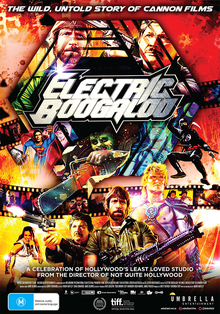
Bad Movie Month #31: Electric Boogaloo: The Wild, Untold Story of Cannon Films
 |
| It's over! |
Directed by: Mark Hartley
Produced by: Veronica Fury, Brett Ratner
Written by: Mark Hartley
Budget: I can't find any solid information concerning this documentary's budget.
Starring: Menahem Golan, Yoram Globus
Just because it's Bad Movie Month doesn't mean I have to exclusively watch bad movies. It also means I can watch movies about bad movies, and Electric Boogaloo is just that.
Were I to go back and redo my list of movies to watch this month, I would have included more Cannon films. When it comes to B-movie studios, Cannon ranks the highest on that particular ladder, and this documentary explains why in pretty good detail.
The Cannon Group started between Dennis Friedland and Chris Dewey as a production studio which bought and produced the cheapest possible scripts they could find, with their budgets often limited to $300,000 per film. The vast majority of these were English versions of foreign-language softcore porn, with barely-there stories and lots of nudity. But as the 70s marched on the company started to flounder as lack of returns and tax wrangling serious hurt the company's financial strength.
So the two sold the company to a pair of Israeli film buffs, Manahem Golan and Yoran Globus, who essentially created the modern B-movie reputation.
Their business model consisted of buying the absolute cheapest scrips they could find, creating a poster for the as-yet-unfinished movie, and presenting it to potential investors. If the movie was purchased, they would knock it out in a few weeks as cheaply as possible and release it. This led to the creation of posters for a multitude of movies that never actually saw production, and often never left the script at all; however, it also gave rise to what was essentially a revival of a studio-system studio, where Cannon could control every aspect of the movie in-house.
Several of Cannon's big hits were from the 80s, including Enter the Ninja, Death Wish, Missing in Action, and the first Breakin'. Rather than let the mild successes go to their heads, Golan and Globus continued with their cheap production methods through the 80s, often producing over 40 films a year, which is absolutely insane. Many of these were over-hyped by the studio and seriously underperformed, but Golan had the ability to somehow convince people to continue funding his movies.
Unfortunately (or fortunately, depending on your view of the company and its practices), by the late 80s an early 90s Cannon's financial juggling caught up with the company and they were investigated by the Securities and Exchange Commission to determine whether Cannon misreported their finances. This, combined with a string of financial failures, including Superman IV: The Quest for Peace, Captain America, and a failed attempt at a Spider-Man movie, Golan and Globus split and Cannon was gone, in all but name.
Electric Boogaloo is a look at The Cannon Group from people in the movie industry who worked with the two lead studio heads, including actors, writers, producers, and other production crew members. Overall it provides what seems to be a level, fair look at some of the practices, and doesn't shy away from the bad parts.
Sometimes with documentaries concerning people who are still active or alive you see either attempts to tear down the person's reputation or hail them as a champion of some particular vision. Electric Boogaloo doesn't seem to fall into either trap, and instead provides what seems to be a good representation of Globus and Golan as two guys who really like movies, who really wanted to make movies, and who made the best movies they could using their resources. Cannon definitely had some strange beginnings and people in the documentary don't shy away from calling the company out for its early exploitative nature.
But, the movie also doesn't shy away from the impact that Cannon had on the modern film landscape. The action movies we see today (the documentary points to Olympus Has Fallen as one example) are held up as simply Cannon movies with actual production value and care put into the scripts. It's something I hadn't considered before, but the point is presented that Cannon actually shaped the current action scene and movie, which I think has some merit.
One thing I would have liked to see from the documentary is actual interviews with Golan and Globus, but the movie addresses that at the end: the two were approached to appear in the documentary, but both declined...and several months before this movie was released, they produced their own documentary called The Go-Go Boys: The Inside Story of Cannon Films. Unfortunately I wasn't able to find a copy to watch, as I would have loved to compare the two, but such is life.
Again, if I were to do this again I would probably put some more Cannon movies onto the list. The biggest problems would be choosing which ones, and trying to make sure they wouldn't overshadow everything else. Maybe next time I'll just do a Cannon month, because there's certainly enough different movies to choose from.
Should You Watch It?
I think that, as a documentary, Electric Boogaloo accomplishes everything a good documentary should. It goes into the background, the current events, and gives a wide variety of opinions on how and why the subjects ticked. If you're into movies at all and would like to learn a little bit about the company that produced all those Chuck Norris VHSes, give this a shot.
Thanks for reading.
Wednesday, December 30, 2015
Bad Movie Month #30: Breakin' 2: Electric Boogaloo
 |
| I'm no expert, but that shoe looks impractical for dancing. |
Directed by: Joel Silberg
Produced by: Allen DeBevoise, David Zito
Written by: Charles Parker, Allen DeBevoise (screenplay), Charles Parker, Allen DeBevoise, Gerald Scaife (Story)
Budget: Low
Starring: Lucinda Dickey, Adolfo "Shabba Doo" Quinones, Michael "Boogaloo Shrimp" Chambers
When an evil realty developer wants to demolish the community center and replace it with a
I might be reading into that a little bit, but you get the idea.
The movie takes place in the 1985, the most 80s year of the 1980s, with all the male belly shirts, big hair, and choreographed street dance routines you could ask for. While Killer Klowns may have been the epitome of the Ugly 80s, Breakin' 2 portrays the glam-80s, where all we wanted to do was dance and get perms. There was probably still the cocaine problem, but it helped us look good in spandex, so it was all good.
The acting throughout is the epitome of phoned-in 80s sequel acting, the sets and costumes would seem exaggerated if that wasn't what people actually wore, and the writing is what you'd expect from a dance movie. It's interesting seeing that dance "films" up to, and including, the most recent Step Up still follow the same beats and plot points.
The Rad
The dancing is the focus of the entire thing, and at least everyone in this movie can dance. And when I say dance, I mean they move. Not only that, but the movie embodies all the classic cheesy 80s tropes: evil realty developer, a group of misfits fighting the man, a dance battle under a graffiti-dappled bridge, and at one point a group of people dance battle with nunchaku and trash-can lid shields. If that's not rad, I don't know what is.
There's a scene where Michael Chambers dances up the wall and on the ceiling, and it's actually really impressive as an effect thanks to its execution. Here's the scene in question, if you're curious. The weirdest part is that this happens in the universe of the movie. Yeah, partway through one of the characters walks in and notices him literally dancing on the ceiling, which means that at least one of the people in this movie can violate the laws of gravity through dance. Why couldn't the entire movie be about that?
The Bogus
The movie speeds through every single dialogue scene to skip to the dancing, which makes it feel like an advertisement for a community center, rather than an actual movie. While the dancing is entertaining to watch, it's pretty much fluff without anything of substance to support it. If you cut out all the dancing, you'd have a movie that lasts maybe twenty minutes. There are also numerous montages of city life, so many that it's probably appropriate to refer to most of this movie as pure filler.
In all honesty, nothing here really happens, despite the fact that there's so much going on. It sounds like a contradiction, but after all the dancing, conversations, and "plot" finishes and the credits roll, you realize there wasn't much to the movie. It's all glitz and filler, and though the dancing may be well done it gets tiring after a little bit.
At the one hour point (gee, notice a trend) the movie grinds to an emotional halt. This is about where the "Storming the city hall meeting" scene takes place, and it feels like it should instead happen at the end. Instead we follow with an assault, hospital dance number with nurses who heal the sick (and resurrect the dead!) through dance...not a joke, this all happens within the movie's universe, and is clearly not supposed to be a musical-style dance scene. No one comments on it, no one mentions it ever again, and it's treated as if it's completely normal.
The Rest
"2: Electric Boogaloo" has become a pop culture monument, indicating a sequel that no one really needed. It's actually the reason I chose to watch this movie, because until I watched it I didn't have much context for it aside from the fact that it was a sequel title. I did some research and it doesn't actually seem that the movie showcases the actual Electric Boogaloo dance much, if at all.
This movie was produced by Cannon Films, the iconic studio behind a huge number of the memorable low-budget releases ranging from the 60s to the 90s. The first Breakin' was actually one of the last financially profitable movies released by Cannon before their distribution deal with MGM fell through. Apparently there were some major contentions between the writers and producers of Breakin' 2, primarily due to the fact that the producers wanted to maintain a G-rated movie and the original writers trying to create a more serious look at inner-city 80s culture. Yeah, seriously.
I want to see a Cabin in the Woods style deconstruction of dance movies, where dancing is a method to unlock some sort of primal underlying hive-instinct in the human mind. Something a little like the music video for LMFAO's Party Rock Anthem, but actually, you know...well done.
Will You Dig It?
Though I found it entertaining, you will have to have a high tolerance for the 80s in order to watch this. It kept me entertained for the most part, but I found my attention wandering whenever the on-screen action slowed down.
However, as a white guy whose signature dance move is "Bend your knees in time to the beat," I had a pretty good time overall.
Tuesday, December 29, 2015
Bad Movie Month #29: Age of Dinosaurs
 |
| Someone skipped arm day. |
Directed by: Joseph J. Lawson
Produced by: Paul Bales, David Michael Latt, Michael Meilander, David Rimawi
Written by: Hank Woon, Jr.
Budget:
Starring: Treat Williams, Ronny Cox, Jillian Rose Reed, Joshua Michael Allen, Max Aria
I swear I didn't know this was an Asylum movie until the first credit popped up.
When a laboratory resurrects dinosaurs and performs genetic experiments on the animals, it's only a matter of time before they get loose and we start following The Lost World story beats.
This is a movie where evil science must push forward to accomplish its goals, no matter how many "setbacks" or "troubles" the processes encounter. As one character says early on, "why start with butterflies and lizards when you can get going with the cool stuff?"
The Good
At certain points the dinosaurs are animatronic and actually look pretty good. The designs are goofy sci-fi schlock, with horns and spikes in random places, but the movements look alright. The unfortunate thing is that the animatronics are only used once or twice after that first scene, but at times they opt instead to use shadows projected on a wall which is at least an artistic choice that seems to have been driven by the realities of their low budget.
Compared to the other Asylum movies I've seen this one feels like its crew put in the most effort. While that isn't saying much considering the general lack of care the company spares for its productions, it stands out, especially when you consider just how dumb Snakes on a Train was. The difference seems most apparent in the quality of the direction, because unlike most others, Age of Dinosaurs actually looks like a movie. The difference is so notable that, with better actors and effects I could see this actually working as a fun B-movie, rather than an attempt to cash in on Jurassic World.
The Bad
It's when the animatronics are replaced by CGI that the dinosaurs start looking like crap. The first shot of the carnotaurus walking around and biting someone's head off looks cheap. The shots of the dinosaur's eyes look really, really cartoony. Of course, this doesn't just apply to the dinosaurs but the environments and setting whenever computers are used to render their holding cells or cloning pods. At one point a bunch of glass shatters towards the screen as a fuzzy mesh. During a chase scene the dinosaur's model is animated faster than it should logically be moving, so it looks like it's sliding along the ground.
One thing that doesn't help the animation is the dinosaur designs themselves. It's fairly obvious that the people who worked on this movie never actually studied dinosaur anatomy, because each one looks like a drawing by someone who thinks dinosaurs are cool without actually knowing what they looked like.
As expected the acting isn't anything to write home about, except for when it's really, really bad. The movie's "kid," Jade, is a stereotypical brat, complete with attached cell phone, college acceptance/rejection subplot, and imitation Jennifer Tilly squeak. The scientists and crew are a group of pretty blonde women who can't seem to forget that they're reading off a script while they aimlessly twiddle with buttons and knobs on a control board. Wheelchair CEO (I can't remember the character's name) does fine as an amoral, big-picture science guy.
The movie outright steals several shots or scenes from the Jurassic Park series, including the classic velociraptor-kitchen scene, even down to the framing. Here is the shot from Age of Dinosaurs. Here is a shot from Jurassic Park. Uh, I mean, surely this movie was a monument of ethical writing and film-making.
During one action scene there's a SWAT team shooting at the big bad dinosaur, and the captions indicate that there should be gunshots...but it looks like they forgot to put in the muzzle flashes and sound effects, because all the actors are doing is shaking their guns and pretending to shoot. Of course, this scene comes immediately before the dinosaur takes down a CGI helicopter, so maybe their budget could only afford either gunshots or helicopters.
I don't know whether Netflix provides its own closed captioning or if it used the movie's native CC tracks, but whoever created it should be embarrassed. There were numerous typos, inaccuracies, and missing words which really shouldn't happen in this day and age.
The Rest
Sometimes I wonder why we can't get a good dinosaur movie. I don't mean that as a joke, despite how silly it might be. The original Jurassic Park is great, but I can't really think of any other high-profile, well-received dinosaur movie. I might just start writing a treatment for Jurassic Continent...
Should You Watch It?
Honestly...this might be worth your time. As the movie goes on it gets goofier and goofier, hitting critical mass around the one hour mark. Special scenes of note include the "No joke!" dinosaur text, the exploding elevator, and a spinosaurus somehow chilling on top of a huge skyscraper. There is enough here that you might be able to overlook some of the Asylum crap.
Extra
The Asylum has had some success recently making original trash like Sharknado, which at least shows they are self-aware enough to understand their place in the current pop culture landscape. With this under their belt I wonder whether the Asylum couldn't make some sort of respectable name of themselves, in the same vein as Troma or Cannon, by abandoning their mockbusters altogether and producing low-budget camp fluff. While 2015 showed no sign that they were going to stop making crap, Sharknado 4 is planned for release sometime in 2016, so if that's successful maybe the studio can continue branching out.
Subscribe to:
Posts (Atom)